Best Landscape Design Solutions for Eco Friendly and Custom Landscaping
The best landscape design rarely begins with plants. It starts with pressure points. A side yard that turns muddy every winter. A front entrance that feels flat even after fresh mulch. A backyard landscaping plan that looks good in a sketch but bakes in the afternoon sun and becomes expensive to maintain by July. Good design solves those real conditions first, then builds beauty around them.
That matters even more in Southern California, where water costs, heat, soil conditions, and local style all Ridgeline Outdoor Living landscaping service in santa ana shape what works. Homeowners searching for affordable landscaping Santa Ana often want the same thing: a yard that looks polished, fits the property, and does not become a weekly burden. Business owners looking at commercial landscaping usually want curb appeal, durability, and predictable maintenance costs. In both cases, the strongest results come from the same discipline, thoughtful planning, plant choices tied to climate, and construction details that hold up over time.
Over the years, I have seen expensive installations fail for simple reasons. Irrigation zones were set up without regard to slope. Trees were planted too close to paving and lifted the hardscape within a few seasons. Lawn areas were installed where family traffic was high, shade was heavy, and drainage was poor. None of those problems came landscaping service in santa ana from a lack of effort. They came from design decisions made without enough attention to how people actually use the space.
What separates good landscaping from the best landscape design
A strong landscape design has an immediate visual effect, but its real quality shows up months later. The irrigation works without constant adjustment. The mulch stays in place after wind and rain. The plant palette matures gracefully instead of becoming crowded and uneven. Maintenance crews can mow, prune, and clean without fighting awkward corners or brittle plantings.
The best landscape design usually balances five things at once:
- Function for the people using the property
- Climate suitability and water efficiency
- A clear visual structure from the street and from inside the home
- Maintenance demands that match the client’s budget and schedule
- Room for the landscape to mature without losing proportion
That may sound obvious, but many projects lean too hard in one direction. Some are visually dramatic and impractical. Others are low maintenance but lifeless. Some are eco friendly landscaping projects in name only, with a few drought tolerant plants added to an otherwise wasteful layout. Good custom landscaping does not force a choice between personality and responsibility. It should do both.
Designing for the way a property is actually used
A landscape has to fit the life around it. That is true whether you are planning front yard landscaping for a compact bungalow or commercial landscaping for a medical office with steady foot traffic.
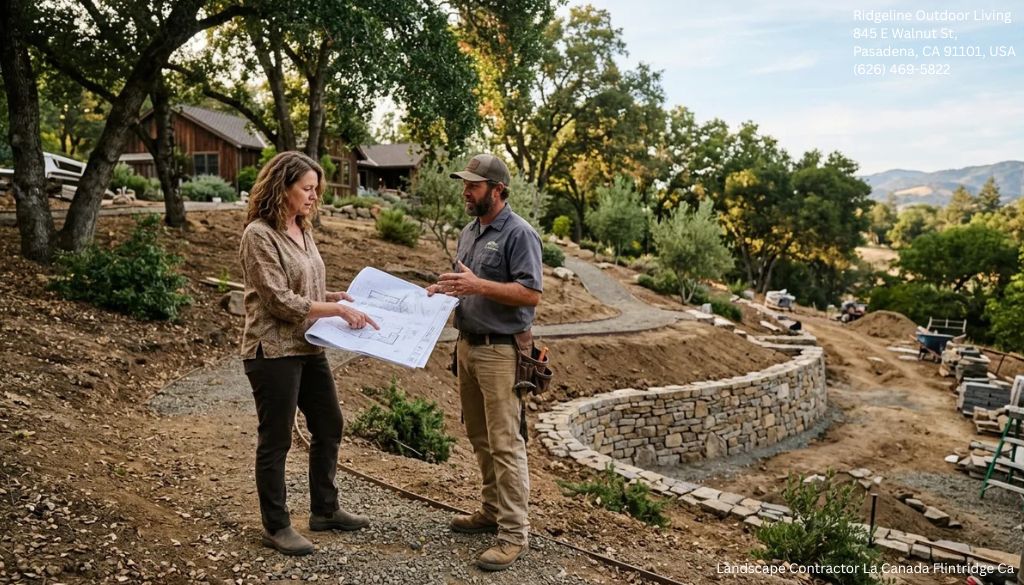
For a family home, the first question is usually how the yard needs to perform. Is the backyard mostly for outdoor dining, children, pets, entertaining, or visual enjoyment from indoors? A narrow side yard may need to double as storage and circulation. A front yard may need to feel welcoming while still providing privacy from the street. These are design questions, not just decoration choices.
I often advise clients to spend a week noticing their habits before finalizing a plan. Which door do they use most often? Where does the afternoon sun become uncomfortable? Which view from the kitchen or living room matters most? People are sometimes surprised to realize that the area they thought should become a lawn is really a path zone, or that the patio should shift ten feet for better shade and circulation.
In custom landscaping, those small observations lead to smarter layouts. A seating area tucked against a hot western exposure might look symmetrical on paper but sit empty most of the year. The same space moved to benefit from morning light and afternoon protection often becomes the most used part of the yard. The design did not become more expensive. It simply became more responsive.
Why eco friendly landscaping works best when it is practical
There is a tendency to treat eco friendly landscaping like a style. In practice, it is closer to a set of operating principles. It means using water where it matters, reducing waste, selecting materials with purpose, and designing planting areas that can thrive in local conditions rather than fight them.
In a California landscaping guide, the central issue is usually water. But water efficiency is not just about replacing lawn with gravel and succulents. That approach can create heat, glare, and a barren feel if handled poorly. Better results come from layered planting, permeable surfaces where appropriate, strategic shade, and irrigation designed by hydrozone. Plants with similar water needs should share the same zone. Lawns, if included, should be intentional and sized for real use rather than habit.
Mulch is one of the quiet heroes of sustainable landscaping. A good mulch layer moderates soil temperature, slows evaporation, suppresses weed growth, and improves the finished look of planting beds. Organic mulch also contributes to soil health as it breaks down. In hot inland conditions, this matters. Bare soil dries quickly, compacts, and often becomes a maintenance headache. Mulch is not glamorous, but it saves water and labor in a measurable way.
There are trade-offs, of course. Some clients prefer decorative rock because it looks crisp and lasts longer visually. In some spaces that choice makes sense, especially around modern architecture or in utility strips. But rock can absorb and radiate heat, and it does nothing to improve soil. For planted beds near patios or windows, a softer organic mulch often creates a more comfortable microclimate. The right answer depends on exposure, style, and maintenance priorities.
Front yard landscaping that adds value without looking overdone
Front yard landscaping carries a unique burden. It is the public face of the property, and it has to look intentional from the curb every day of the year. A great front yard does not need to be elaborate. It needs hierarchy.
That usually begins with the walk to the entry. The path should feel clear, scaled to the house, and framed in a way that guides the eye. Plant masses should support the architecture rather than smother it. Repetition helps. If every corner has a different accent plant, the yard can feel busy and unresolved. A restrained palette often looks more expensive because it feels designed rather than collected.
In Santa Ana and similar neighborhoods, I often see front yards where the lawn occupies most of the space but serves almost no purpose. It gets mowed, watered, edged, and fertilized, yet no one uses it. Reworking even part of that area into planting beds, a small sitting space, or a dry creek for drainage can improve both appearance and efficiency. This is where affordable landscaping Santa Ana becomes less about the lowest initial price and more about reducing recurring costs while improving function.
Lighting deserves mention here as well. A modest front yard with good low-voltage lighting often has more presence than a larger one without it. Soft path illumination, a subtle wash on a textured wall, or uplighting on a well-placed tree extends the landscape into evening hours and improves security without turning the yard into a stage set.
Backyard landscaping that feels personal, not generic
Backyard landscaping should be more specific than front yard work because it serves private routines. This is where custom landscaping earns its name. Some clients need durable open space for play. Others want a quiet courtyard feel with layered planting and a fire feature. Some want edible beds, a soaking tub, or a pool surround that stays clean and navigable.
The most common mistake in backyards is trying to do everything in a limited footprint. A small lot cannot be a sports lawn, full outdoor kitchen, oversized dining terrace, shade garden, and play zone all at once without feeling cramped. Priorities matter. If dining and entertaining are the main goals, it often makes sense to give the patio more generous dimensions and reduce decorative planting that interrupts circulation. If the owners want a garden retreat, then paving can pull back and planting can create enclosure.
A practical example: on a recent suburban project, the clients wanted a modern entertaining yard but also worried about maintenance. We reduced the lawn to one rectangular panel sized for children’s play, grouped all moderate-water plants onto one irrigation zone, added decomposed granite paths for permeability, and used mulch heavily in planting areas. The result looked cleaner, used less water than the previous yard, and made weekly upkeep faster. The design was not flashy. It was disciplined.
Irrigation is where many beautiful plans succeed or fail
If there is one technical area that deserves more respect, it is irrigation. An irrigation service for homeowners should do more than repair broken heads and reset timers. It should evaluate pressure, coverage, runoff, emitter placement, and scheduling based on season and plant establishment.
The most polished yard can decline quickly under poor irrigation. Overwatering is often more damaging than underwatering. Roots stay shallow, disease pressure rises, and plants become dependent on constant moisture. In clay-heavy soils, runoff and compaction follow. On slopes, poorly adjusted spray heads waste water and leave dry spots. These are common field issues, not rare exceptions.
For eco friendly landscaping, drip irrigation in planting beds is often the better fit, especially when installed properly beneath mulch and organized by plant type. Turf areas, if present, need matched precipitation and tight coverage. Smart controllers can help, but they are not magic. A bad layout with a smart timer is still a landscaping resources bad system.
Homeowners often ask how frequently irrigation should run. The honest answer is that it depends on soil, exposure, plant maturity, and season. New planting requires more frequent monitoring. Established drought-adapted plants should receive deeper, less frequent watering. If a contractor offers one fixed schedule for every zone on the property, that is usually a warning sign.
Trees shape the landscape more than most people realize
A mature tree can do more for comfort and visual character than almost any hardscape feature. It creates shade, frames views, softens architecture, and can reduce heat gain around outdoor living areas. Yet tree placement is often treated as an afterthought.
A sensible tree service guide starts with matching species to space. Mature canopy width, root behavior, litter, and branching habit all matter. Small ornamental trees can work beautifully near patios or courtyards, where scale is important and filtered light is welcome. Larger shade trees need enough room away from foundations, pools, walls, and paving. Planting a vigorous tree too close to infrastructure creates expensive problems later.
Pruning also deserves restraint. Over-thinned trees often respond with weak regrowth, sun stress, and poor form. Good pruning clarifies structure and removes conflict. It should not leave a tree looking skinned alive. On properties where visibility and security matter, especially in commercial landscaping, tree canopies should be raised and managed thoughtfully without compromising health.
When clients plan a landscape in phases, I usually encourage them to install key trees early. Shrubs and perennials can fill in within a season or two. Trees need time. The sooner they go in, the sooner the landscape begins to feel settled.
Lawn care still has a place, but it should be intentional
Lawns are under heavier scrutiny now, and fairly so. They can consume significant water and maintenance. Still, a blanket rule that every lawn should disappear ignores how people use their properties. A lawn can be the best surface for children’s play, pets, casual seating, and visual relief, especially when the shape is simple and the size is proportionate.
The issue is not whether a lawn exists. It is whether it belongs there.
From a lawn care perspective, smaller, purposeful turf areas are easier to keep healthy. They allow more efficient mowing services, cleaner edging, and better irrigation control. A grass mowing guide for homeowners should be simple: mow at the right height for the grass type, avoid cutting too short, keep blades sharp, and adjust irrigation to weather rather than habit. Scalped lawns stress quickly in heat and invite weed pressure.
For many Santa Ana properties, reducing lawn square footage rather than eliminating it outright is the smartest compromise. You preserve usable green space while making room for drought-tolerant planting, shade trees, and seating areas that add more character than another strip of turf along a fence line ever could.
Commercial landscaping needs a different kind of discipline
Commercial landscaping is not just residential design at a larger scale. The priorities shift. Durability, sight lines, maintenance access, liability, and consistent appearance matter more. A commercial property has to perform for many users, landscapers in santa ana ca ridgelineoutdoorliving.com not just one household.
That often means simplifying the plant palette, using species with reliable form, and avoiding design gestures that are hard to maintain. Entry zones deserve emphasis because they shape first impressions. Parking lot islands need heat-tolerant, low-litter plantings. Irrigation controls should be accessible and organized. Mulch selection matters because materials that migrate into paving or drains create recurring labor costs.
I have seen commercial sites transformed by relatively modest changes: replacing thirsty annual beds with perennial masses, correcting irrigation overspray onto sidewalks, adding canopy trees in high-heat walkways, and tightening the maintenance plan so pruning follows plant habit rather than a one-size-fits-all schedule. Those are not glamorous interventions, but they improve performance and appearance immediately.
For property managers reviewing landscaping services in Santa Ana, the key is consistency. A landscape should not look impressive only after a monthly cleanup. It should hold together week by week.
Materials, grading, and drainage are not optional details
People often focus on plant selection because it is visible and enjoyable. But grading and drainage determine whether the landscape works after the first serious rain or irrigation cycle. Water should move away from structures, not toward them. Hardscape needs proper slope. Planting beds on hillsides need stabilization and soil attention, not just decorative cover.
On many residential projects, drainage is the hidden budget item that saves the project. French drains, swales, catch basins, or regrading may not photograph well, but they prevent damaged foundations, eroded mulch, and standing water that kills roots. If part of a yard stays soggy, no amount of pretty planting will solve the core issue.
Material choice also affects usability. Decomposed granite can be attractive and permeable, but it may migrate in high-traffic areas or on steeper slopes. Concrete is durable and easy to maintain, but large uninterrupted areas can feel harsh unless balanced with planting and shade. Natural stone looks rich, but installation quality matters, especially around drainage and joint stability. The best choice is rarely universal. It is contextual.
How to judge landscaping services before you hire anyone
A polished proposal can hide shallow thinking. Before hiring a company for landscaping services in Santa Ana, ask how they approach site conditions, water use, maintenance, and plant maturity. The answers tell you more than glossy renderings.
Use these questions to separate installers from designers who understand the long game:
- How will you group plants by water needs and exposure?
- What changes do you recommend to improve drainage or reduce runoff?
- How large will these plants and trees be in three to five years?
- What kind of maintenance will this design require each month?
- Where can we reduce cost without weakening the overall plan?
A good contractor or designer should answer directly and specifically. Vague promises about low maintenance or easy care are not enough. Every landscape needs care. The real question is whether the level of care matches your budget and expectations.
The case for phased landscaping when budget matters
Not every project needs to happen at once. In fact, phased work is often a smarter route for homeowners who want custom landscaping without overspending. Start with the bones: grading, drainage, irrigation, hardscape layout, and key trees. Then build out secondary planting, lighting, and specialty features as budget allows.
This approach protects the design. Too many projects cut infrastructure to preserve decorative extras, then pay for it later in repairs and rework. If the grading is wrong, if the irrigation is patchy, or if the patio is undersized, adding more plants will not fix the underlying problem.
Phasing also helps clients learn how they use the space. After a season, they may discover the yard needs more shade, less lawn, or a different path connection than they first imagined. A flexible plan makes room for that real-world feedback.
What homeowners often overlook in maintenance planning
Even the best landscape design can become frustrating if the maintenance model is unrealistic. Some yards look simple but demand frequent hand care. Others appear lush yet remain manageable because the layout supports efficient service.
For homeowners balancing beauty with practicality, maintenance planning should include lawn care, pruning cycles, seasonal irrigation adjustment, replenishing mulch, and occasional plant replacement. Mowing services are easier and cheaper when lawn shapes are simple and obstacles are limited. Pruning is more predictable when plants are chosen for their mature size rather than forced into spaces that are too tight. Weed pressure drops when mulch is maintained and irrigation stays targeted.
This is where a california landscaping guide mindset is useful. Design for the climate, not against it. Use the natural strengths of the region, winter growing seasons, dry summers, intense sun, and wide microclimate differences, to create a landscape that can age well without constant correction.
Where beauty and responsibility finally meet
There is no single formula for the best landscape. A shaded family yard in an older Santa Ana neighborhood will need a different response than a minimalist front yard on a newer lot, and both will differ from a commercial landscaping plan for a retail center. What carries across all of them is judgment.
The strongest landscapes feel inevitable once they are built. The front yard landscaping fits the house. The backyard landscaping supports real habits. The irrigation makes sense. The trees are placed for future shade, not just immediate effect. The mulch, lawn care plan, drainage work, and material choices all support one another.
That is what makes eco friendly landscaping and custom landscaping worth doing well. They are not about trend language or surface-level upgrades. They are about creating outdoor spaces that look composed, use resources wisely, and still feel good to live with a year from now, not just the week after installation. When that happens, the landscape stops being another home project and starts becoming part of how the property truly works.